
What causes soil to wash down a landscaped slope?
Soil washes down a landscaped slope when flowing water can pick up exposed material and carry it away. Concentrated discharge from a roof, drive or upper path can cut channels even where the surrounding ground appears planted. Bare soil and disturbed fill may be especially vulnerable before vegetation is established. Replacing the lost topsoil without changing the flow can lead to the same cleanup after the next storm. We look at the source, route and destination of runoff before discussing a retaining wall. The solution should reduce the cause of the erosion and provide support only where the planned grade actually requires it.
When is a retaining wall appropriate for an eroding bank?
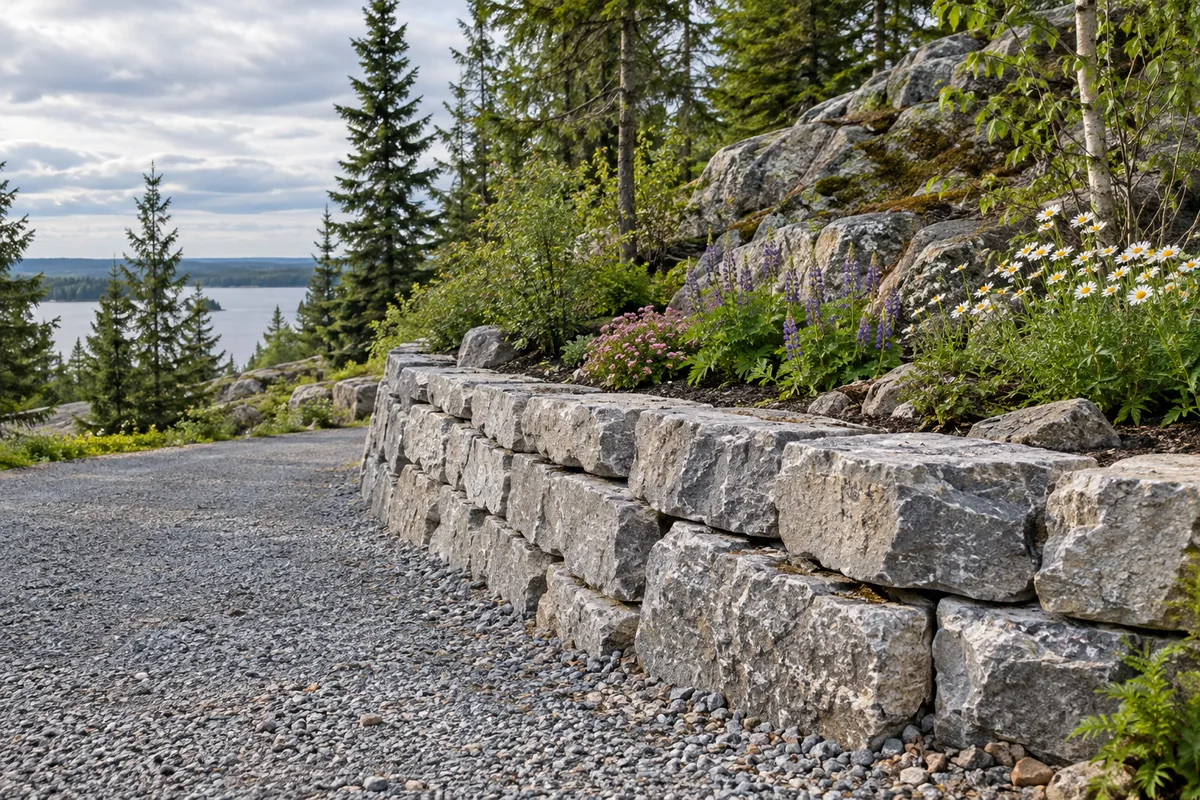
A retaining wall is appropriate for an eroding bank when the project needs a stable change in grade that cannot be achieved suitably with the available slope. It may create a supported edge beside a path or provide room for a useful terrace. However, surface erosion on a broad gentle bank may call for drainage and ground-cover measures rather than a wall. Building a wall without controlling the water can leave soil washing over or around it. We assess the desired finished shape and the surrounding land together. That helps define whether retaining construction is central to the solution or only one possible part of a broader landscape plan.
How is surface erosion different from slope instability?
Surface erosion removes material from the face of a slope, while slope instability can involve movement of a larger mass of ground. Small runoff channels and deposited silt may indicate surface loss, but cracking, sinking ground or movement across a broad area require a different level of attention. A cosmetic stone edge should not be assumed to stabilize a deeper problem. We identify signs that need qualified geotechnical or structural review before proposing ordinary landscape construction. Keep people and heavy equipment away from visibly moving ground. Understanding the type of movement matters because a wall designed for the wrong mechanism can leave the underlying risk unresolved.
Book Your Consultation — tell us about your site and the result you need.
Can terraces reduce repeated loss of garden soil?
Terraces can help reduce repeated loss of garden soil when they shorten a long slope and provide planned levels with appropriate surface cover and drainage. The walls support the new grades, but the land between them still needs a route for rainfall and snowmelt. Narrow bare strips can continue to erode, and closely spaced walls may affect one another structurally. We consider landing width, planting and water movement together with the retaining design. Delaying those details until after the stone is placed can create awkward wet pockets. A successful terrace plan makes each level useful while addressing why the original garden soil kept moving downhill.
What should happen to runoff from higher ground?
Runoff from higher ground should be assessed as part of the whole property's drainage pattern before it is redirected. A channel that carries water away from one wall may create washout farther down the lot or at a neighbour's boundary. Existing drainage easements, municipal infrastructure and regulated features can also constrain the solution. We discuss where the water starts and the proposed receiving area before setting wall lines. Appropriate grading or collection work may need to accompany the retaining installation. The aim is a stable, lawful route that remains functional after landscaping, rather than a temporary trench that becomes hidden or blocked as the site is finished.
What changes when erosion is near a lake or watercourse?
Erosion near a lake or watercourse requires early approval review because excavation, fill and retaining structures can affect regulated land and water conditions. A private property boundary does not remove those requirements. North Bay directs shoreline-work enquiries to the relevant municipal staff and the North Bay-Mattawa Conservation Authority. Work should follow their current requirements and any necessary design review before equipment enters the area. We do not treat a shoreline wall as an ordinary upland garden edge or promise that stone placement will prevent flooding. Clarifying the permitted approach first protects the planning process from costly changes after material has been ordered or ground disturbed.
What should property owners record before requesting help?
Property owners should record where soil is being lost, where it ends up and what weather conditions trigger the change. Wide photographs from stable ground are more useful than a close view of a single rut. Include nearby roof outlets, driveways, paths and existing walls, plus any recent work that changed the slope. Avoid entering an unstable area to take measurements. Tell us your North Bay-area location and the intended future use of the space. We can discuss whether retaining-wall construction appears relevant and which conditions need further assessment. Clear observations help turn a general erosion concern into a properly defined project instead of another cycle of replacing washed-out soil.
Ready to plan your retaining-wall project?
Share your location, rough dimensions and the problem you want to solve. Call or request an estimate to discuss suitable next steps.