
Why does water collect behind a retaining wall?
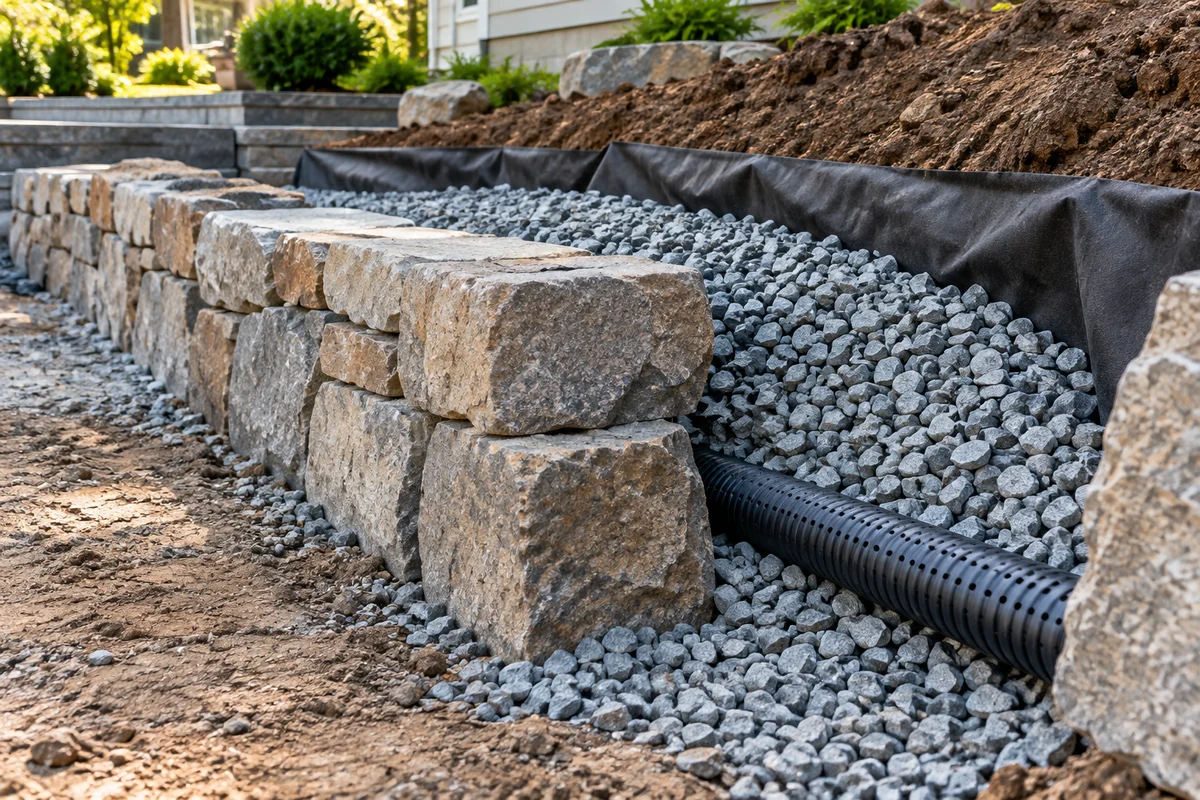
Water collects behind a retaining wall when incoming moisture cannot leave through the intended ground or drainage routes. Rainfall, roof discharge, melting snow and flow from higher land may all contribute. Fine or compacted soil can slow movement, while a blocked outlet can prevent an otherwise suitable drain from working. Persistent wet ground may add pressure and affect the wall's support. We begin by asking when the problem appears and what has changed around the property. The correct response depends on the water source; installing another pipe without understanding that source can leave the same wet area behind the repaired wall.
Is wall drainage the same as yard drainage?
Wall drainage and yard drainage serve related but different purposes. A wall's drainage zone generally handles incidental water within the retaining system, while yard drainage manages flow across or through the wider property. A large roof or parking area can produce runoff that should not simply be sent into the wall backfill. If the two needs are confused, a new wall may still receive more water than its details were intended to handle. We assess the surrounding grades and collection points alongside the wall. The project scope should distinguish work inside the retaining system from any separate surface drainage needed to protect the finished landscape.
What can pooling at the top of a wall indicate?
Pooling at the top of a wall can indicate that the finished surface lacks a suitable fall or that settlement has created a low spot. The water may also be arriving from another part of the lot, making the puddle a symptom rather than the source. Repeated saturation can affect backfill and nearby surfaces, so covering the area with fresh soil may only hide the problem temporarily. We review the level and direction of the ground above the wall and any discharge points nearby. A correction should maintain the required wall clearances and route water appropriately, rather than simply raising the surface against the wall cap.
Book Your Consultation — tell us about your site and the result you need.
Why does the drainage outlet need early attention?
The drainage outlet needs early attention because a pipe only works as part of a complete route for water. The outlet must be suitable for the site and comply with applicable requirements; it cannot simply end wherever excavation is easiest. Low ground, blocked discharge points and neighbouring property boundaries can all constrain the plan. Ignoring the outlet can leave water trapped or move the problem onto a path or another lot. We identify the proposed receiving point before the wall is closed in. That also helps determine whether additional grading or drainage work is needed outside the retaining-wall contract and who will be responsible for it.
Can drainage be repaired without rebuilding the wall?
Drainage can sometimes be repaired without a full rebuild, but the answer depends on access and the wall's condition. A reachable outlet may be addressed differently from a drainage zone buried behind a displaced structure. Excavating behind a wall can alter its support, so it should not be treated as harmless maintenance without assessment. If the wall has moved or the backfill has washed out, a more complete reconstruction may be necessary. We review the visible symptoms and the likely extent of hidden work before discussing options. The goal is to correct the cause while leaving a retaining system that remains suitable for its actual loads.
Will a retaining wall stop property or basement flooding?
A retaining wall should not be promised as a general cure for property or basement flooding. Floodwater, sewer backup, groundwater and building-envelope leaks involve different causes and may need specialists or municipal review. A wall can support grades within a properly designed landscape solution, but it can also obstruct a flow route if poorly placed. We keep the retaining-wall scope clear and identify when the water issue extends beyond it. Describe whether water enters a building, crosses the whole lot or appears only behind the wall. That distinction helps avoid spending on a structure that cannot address the actual flooding mechanism.
What observations help diagnose a wet-wall problem?
Useful observations include when wet ground appears, how long it remains and where water is visible before it reaches the wall. Take safe photographs during or after rainfall from a stable area, including roof outlets, paved surfaces and the lower side of the wall. Note any recent grading, paving or landscaping changes. Do not dig beside a moving wall simply to find a drain. Those details help us discuss whether the project is a new installation, drainage correction or replacement with a revised water plan. Contact North Bay Retaining Wall Pros with your location and the pattern you have observed so the initial discussion starts with the right problem.
Ready to plan your retaining-wall project?
Share your location, rough dimensions and the problem you want to solve. Call or request an estimate to discuss suitable next steps.